Style Guide · 8 min read
Which Suit Colours Are Most Suitable for Men in Pakistan?
Navy, charcoal, black, ivory and beige — how a Karachi tailoring house chooses suit colour for office days, weddings and evening functions.
Colour is the first decision in a commission and the one men most often get wrong. Cut and fit are what a tailor argues about; colour is what the room registers before you have said a word. In Pakistan the calculation is a little different from London or Milan — the sunlight is harder, the wedding season is long and heavily photographed, and most men's skin tone is warm to deep, which flatters some cloths and drains others. Below is how we actually advise clients at our Karachi atelier, colour by colour.
1. Navy blue — the one suit every man should own first
If you buy only one suit in your life, buy navy. It is the most forgiving colour on South Asian complexions: deep enough to read formal, warm enough not to wash you out the way mid-grey can. It behaves under every light — office fluorescents, harsh afternoon sun, and the warm tungsten of a marquee — which is why it photographs so reliably at events. Navy also carries the widest shirt range: white, sky blue, pale pink and ecru all work, so one suit yields a dozen looks. Start with a bespoke 2-piece suit in a plain navy worsted, and it will cover interviews, meetings, nikkah ceremonies and dinners for years.
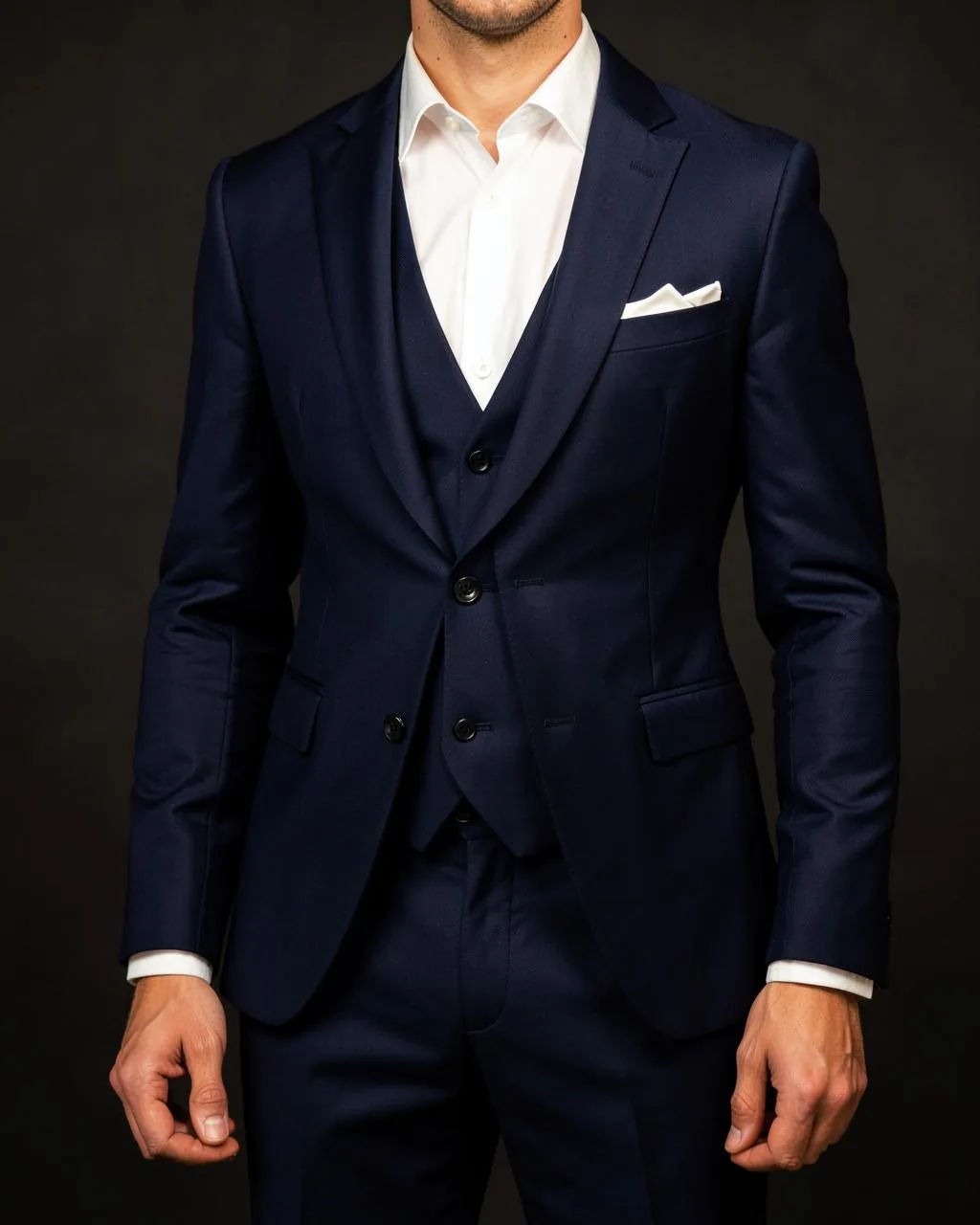
2. Charcoal grey — the professional's second suit
Charcoal is quieter than navy and slightly more senior. In a boardroom it says competence without announcement, and it hides travel and long days better than any other colour. Mid-grey is a common mistake in Pakistan: under our light it can look washed and slightly cheap, particularly against warm skin. Go darker. A charcoal worsted, sharkskin or birdseye in the 250–280 gram range is the safest bespoke business suit you can commission, and a chalk-stripe version of the same cloth doubles as evening wear.
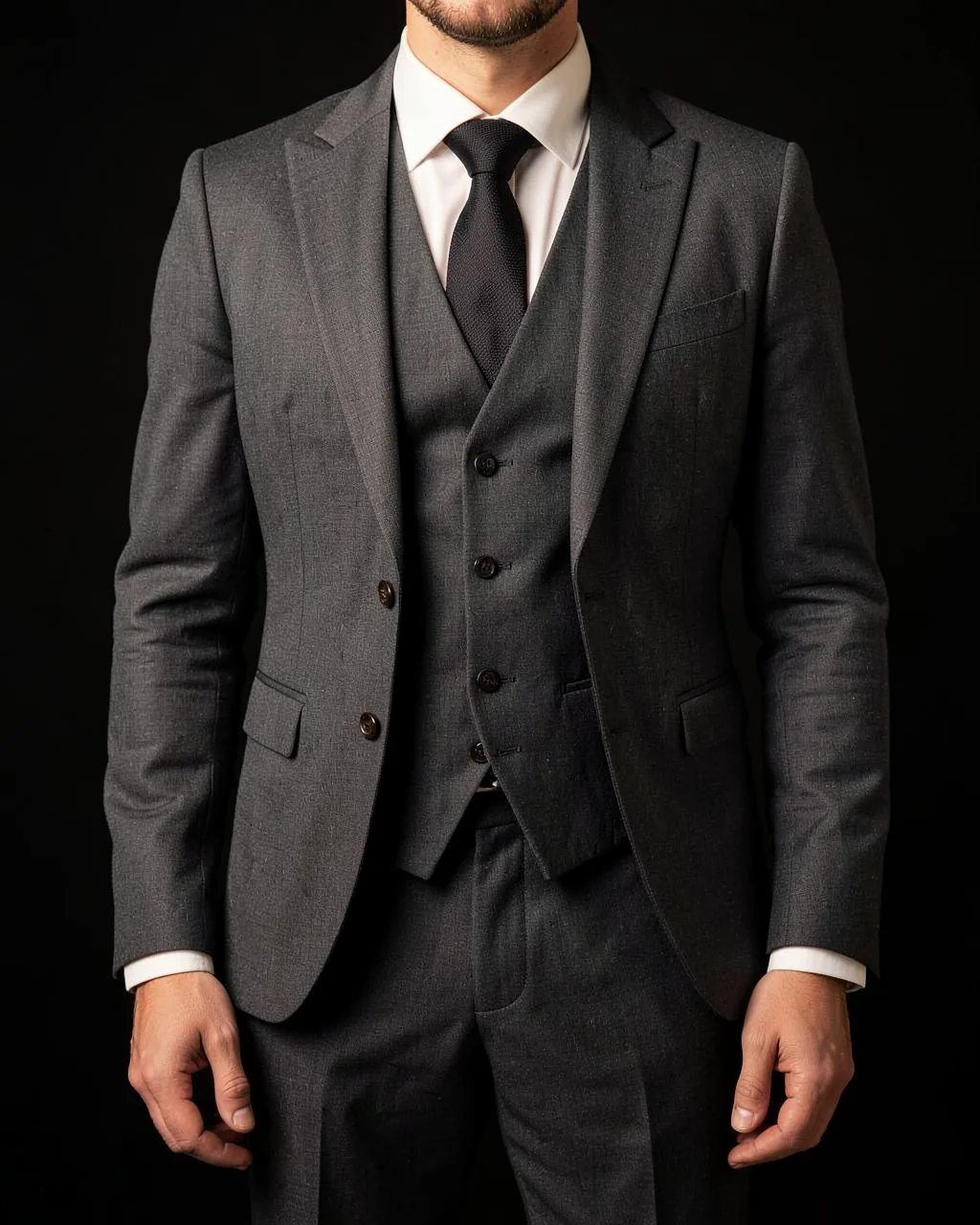
3. Black — evening only, and better in midnight blue
Black is the most requested colour in Pakistan and the most misused. It is unbeatable after sunset — receptions, formal dinners, black-tie — where the light is low and the cloth reads as pure depth. In daylight it flattens, shows every speck of dust, and in outdoor photographs it turns into a silhouette with a face floating above it. Our standing advice: keep black for the bespoke tuxedo and evening functions, and choose midnight blue when you want the same drama with more dimension on camera. A black 3-piece suit with a matching waistcoat remains the safest formal commission in the country.
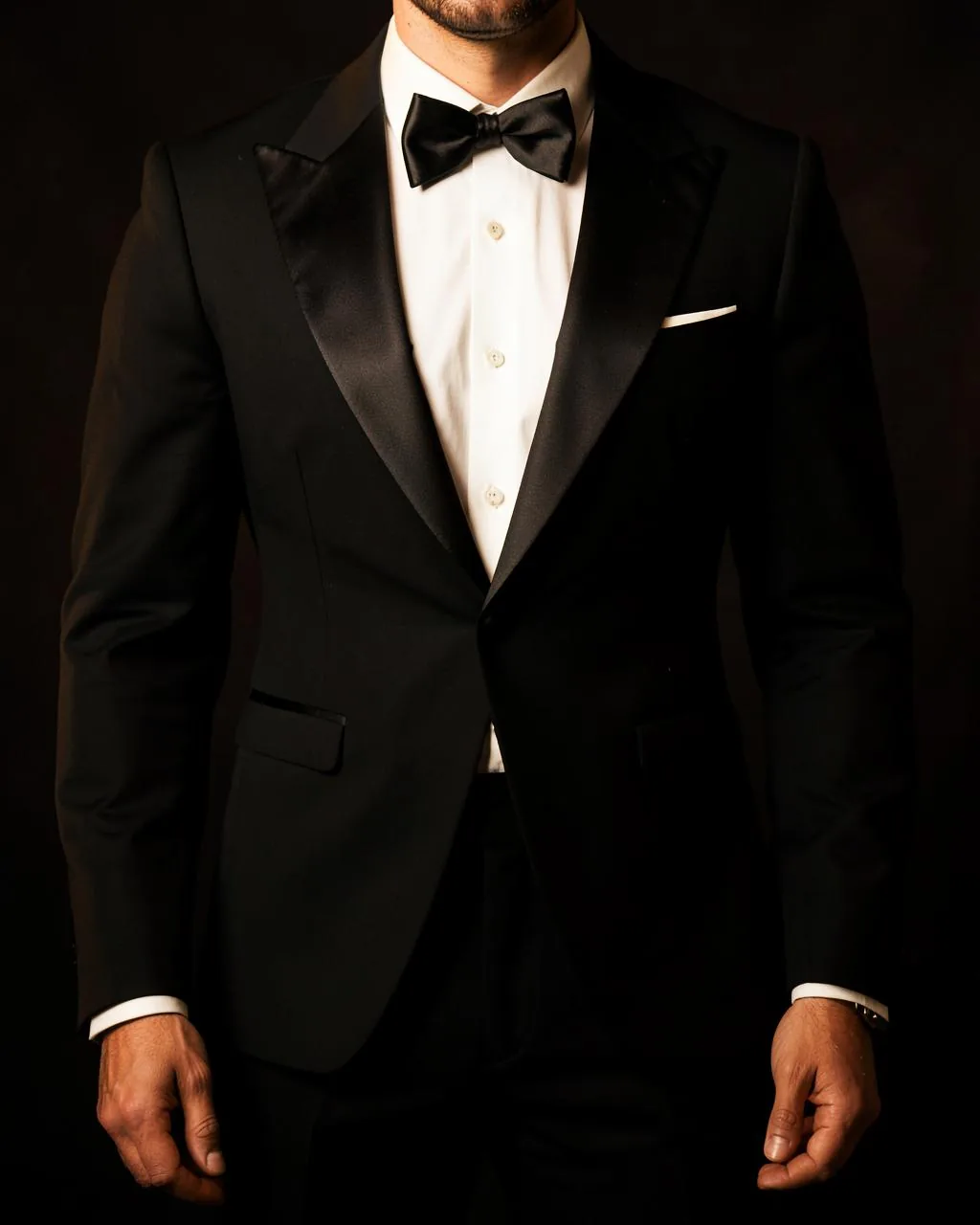
4. Ivory, cream and beige — the daytime wedding colours
For a barat or a daytime nikkah, light is the answer. Ivory and cream carry ceremony without heat, they lift warm skin tones rather than competing with them, and they sit beautifully against traditional gold and maroon décor. Beige and stone are the everyday version — perfect for outdoor daytime events, engagement shoots and summer functions in Karachi. These colours are unforgiving of poor fit and poor cloth, which is exactly why they belong in a bespoke wedding suit rather than off the peg.
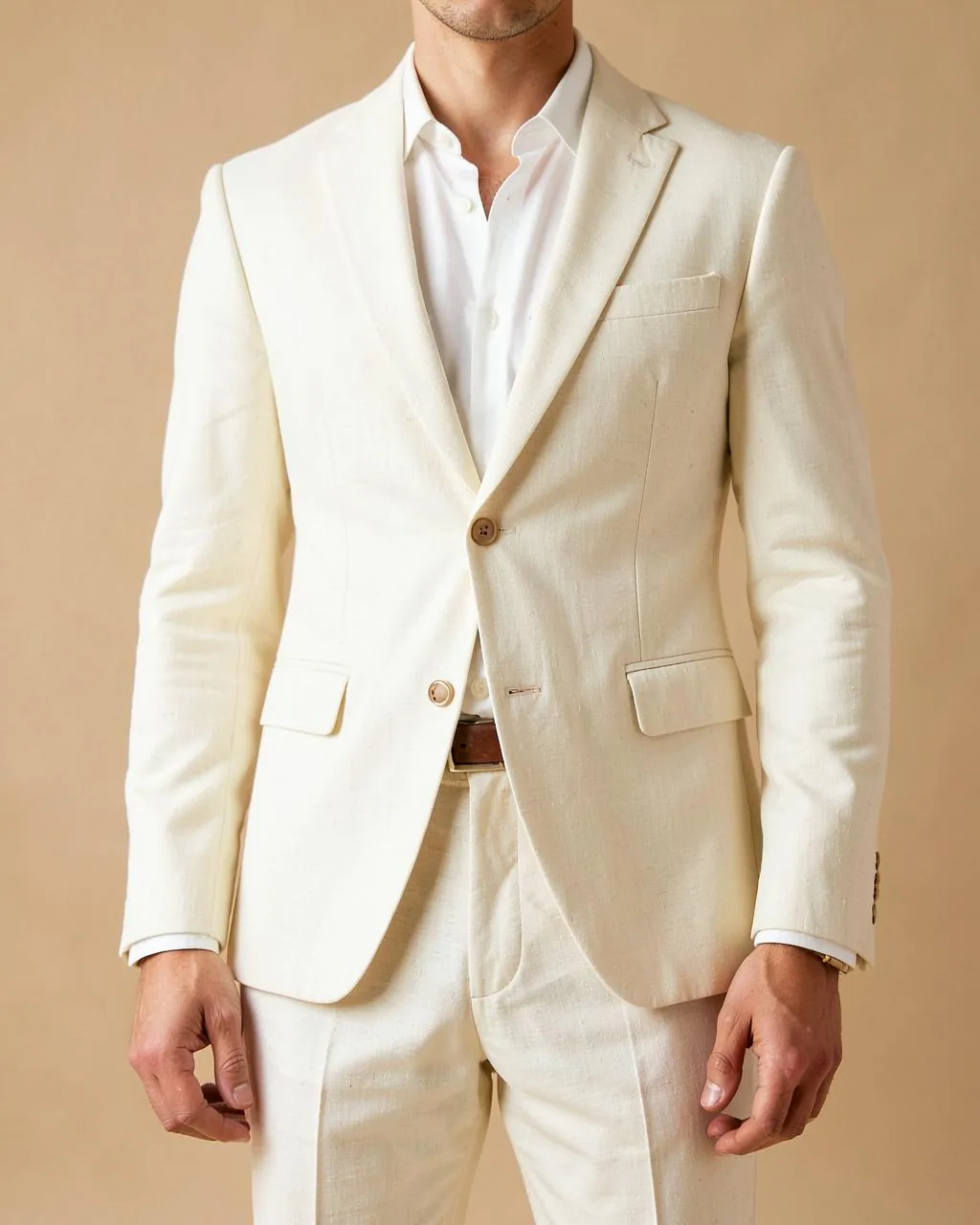
5. Occasion colours: maroon, bottle green, tobacco and velvet
Deep maroon, bottle green, teal and tobacco brown have become the signature of Pakistani evening dressing, usually in velvet or jacquard. They are magnificent for one night and photograph richly under warm lighting, but they are not wardrobe workhorses — nobody wears a bottle-green velvet jacket twice in the same season. Treat them as a party suit commission, and keep the tailoring simple so the cloth carries the statement. A double-breasted cut in a deep tone is the most confident version of this.
Colour and climate: what Pakistani weather demands
Shade is only half the decision — weave is the other half. Karachi's humidity punishes dense, dark cloth, so for summer choose lighter colours in an open weave: fresco, high-twist worsted, wool-linen and pure linen in stone, light grey and sky-toned blue. For December and January weddings in Lahore and Islamabad, flannel, tweed and velvet in charcoal, deep green and midnight come into their own. You can compare the weights and shades in our coat, waistcoat and pant fabrics library, and pair them against the shirt fabrics before you commit.
Matching colour to your skin tone
Fair to medium complexions can carry mid-blues, light greys and pastels easily. Warm and olive tones look best in navy, bottle green, tobacco, camel and cream — colours with warmth in them. Deeper complexions are flattered by strong contrast: charcoal, ivory, sharp navy and clean white shirting. The one universal rule is contrast between suit, shirt and tie: if all three sit at the same tonal level, the outfit reads flat in photographs no matter how good the tailoring is.
Building a three-suit wardrobe
Most men in Pakistan need exactly three. First a navy two-piece for work and general formality. Second a charcoal suit — or a charcoal three-piece if you attend weddings often. Third an occasion suit chosen by season: ivory or beige if your events are daytime, black or midnight blue if they are evening. Add colour after that, not before. Bespoke commissions start Launch Price PKR 29,999 for a two-piece and Launch Price PKR 39,999 for a three-piece, and every suit order includes a complimentary tie, pocket square, socks and cufflinks. Browse the full range on our bespoke suits page, and read our guide to suit prices in Pakistan before you budget.